It is a privilege to be shown the face of a nature being. If you are developing the sensitivity to perceive them, it is a respectful best practice to take photographs – not snapshots – of your subject. As your skills grow, you will come to value this distinction.
A snapshot is quick and casual, made to record a moment without much thought. Focus might be off, too much sun or shade…that is ok. A photograph, by contrast, is intentional. It reflects choices about light, framing, subject, and meaning. A true photograph tells a story and invites the viewer into an experience.
This distinction matters even more when photographing subtle subjects such as nature beings – those presences who reveal themselves in trees, rocks, water and clouds. To share these moments with others, the image must be strong enough that viewers can perceive what you have seen.
The Craft of Photographing Subtle Subjects
Shifting from snapshots to photographs requires you to practice your skills, whether you use a cellphone or a DSLR. Fortunately, this is easier than ever. Camera technology and post-processing tools are increasingly intuitive, yet powerful in their ability to correct flaws in an original capture.
There are countless resources available – YouTube tutorials, photography blogs, and simple searches for your camera model and specific issues.
Join a Camera Club
One of the best ways to advance your craft is by joining a camera club. Look for a group that offers workshops, competitions and structured critiques. Feedback helps you see what works, what distracts and what could be refined. Just as important, observing how others compose and edit images deepens your own artistic vision.
You are never too new—or too experienced—for this kind of learning. For example, one of my photographs of a child in Longwood Garden’s stained-glass alcove, featuring a smiling sun, won first place in my local club’s print division. Let’s look at how the image evolved:
- #1 Raw Image: The original had issues – tilted perspective, distracting elements, and a busy background competing with the subject.
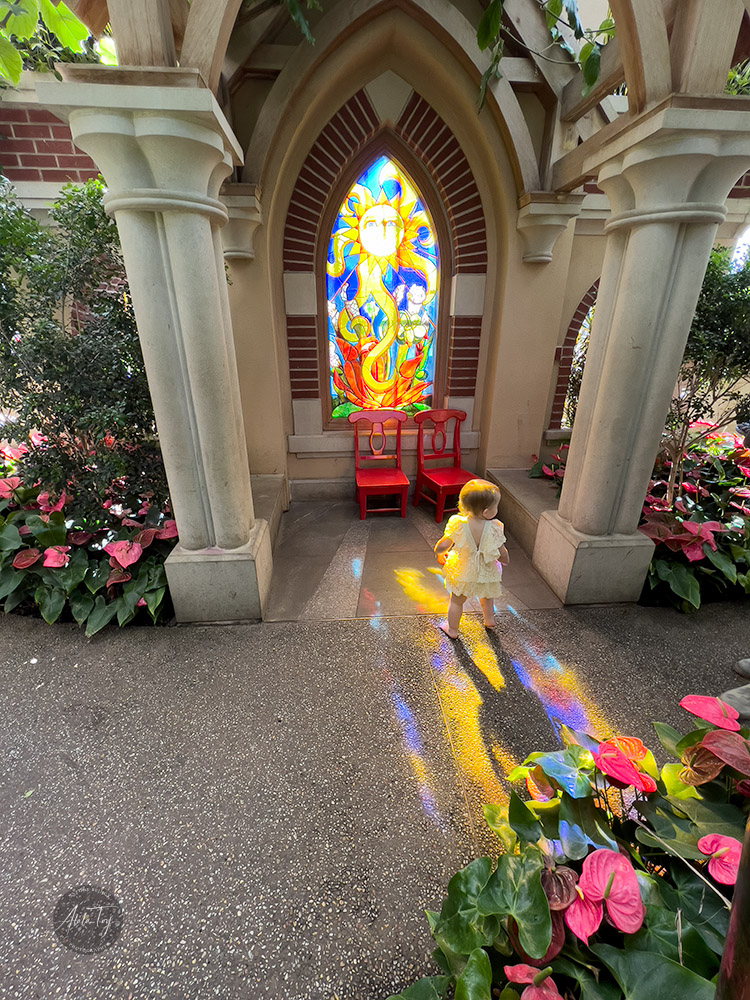
#1 Rainbow sunlight – out of camera
- #2 Edited Version: Using Adobe Lightroom Classic and Photoshop Beta, I straightened architectural lines, cropped, and adjusted color. This version earned the high score and first prize. Yet the judge also offered a critique: soften the edge vegetation and enhance detail in the sun’s face.
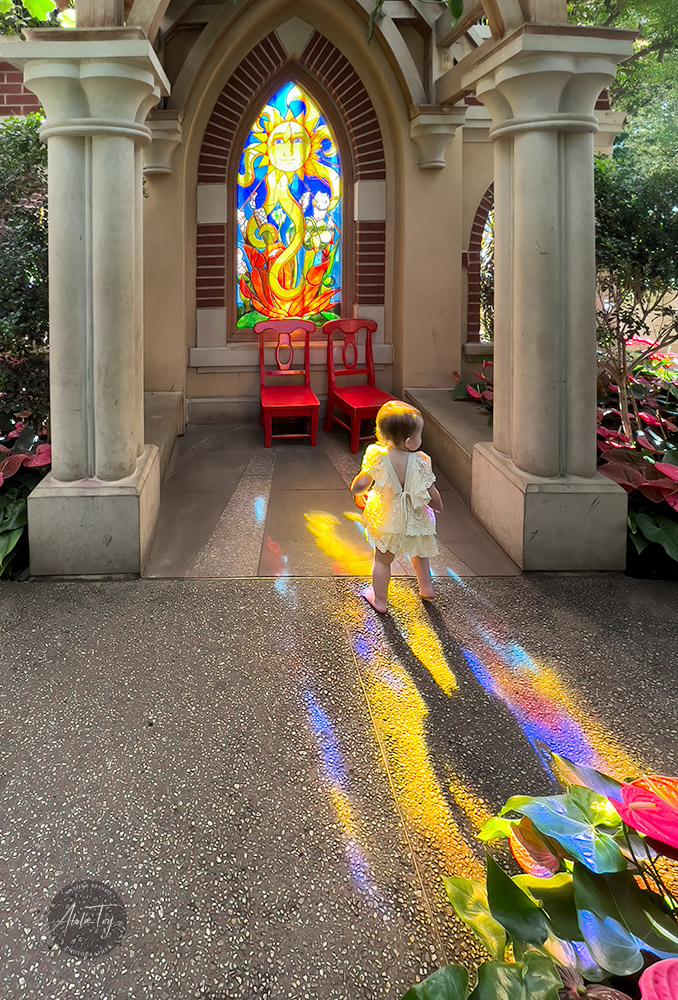
#2 Rainbow Sun – First Place
- #3 Refined Edit: Incorporating his suggestions, I returned to editing. The final version clarified the theme – a small child bathed in the light of the smiling sun. The feedback sharpened my vision and strengthened the story.
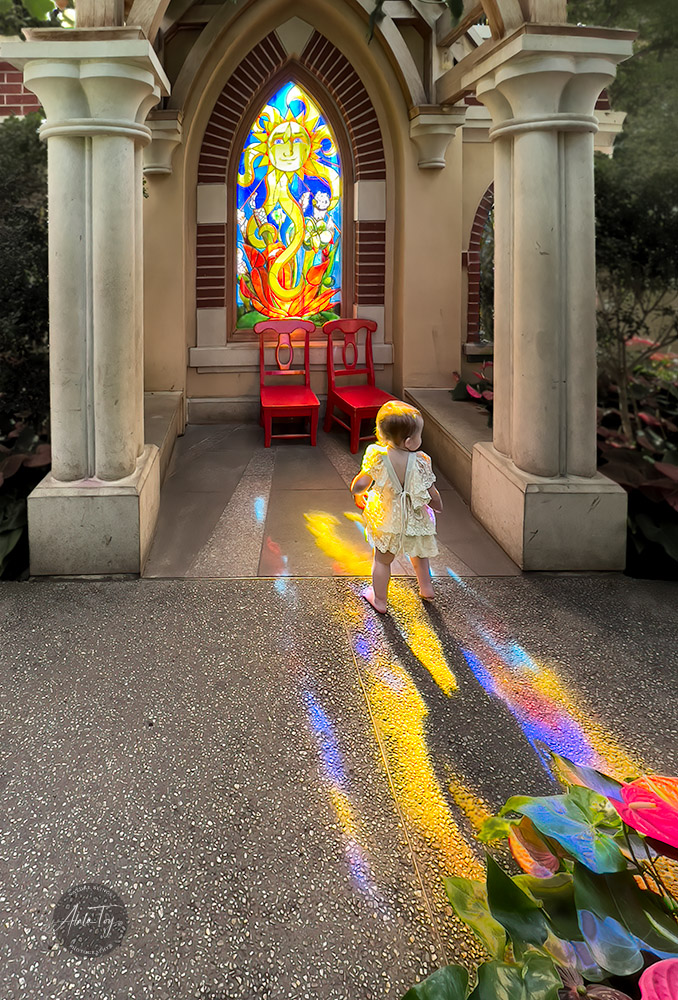
#3 Rainbow Sunlight-After Critique
Your Personal Decision
Mastering nature being photography begins with a personal decision: to honor yourself, to honor the subject you are photographing, and to commit to improving your skills. Doing so makes the reality of these presences artistically accessible to any viewer – whether or not they were attuned to the beings of nature before encountering your work.
Next time you feel a presence in a tree, rock, or stream, pause and ask yourself – will you take a snapshot, or will you take a photograph? The choice you make will shape how others can share in the knowledge you have been privileged to see.
Other Philosophy Articles
If you like this information, you might enjoy


0 Comments