
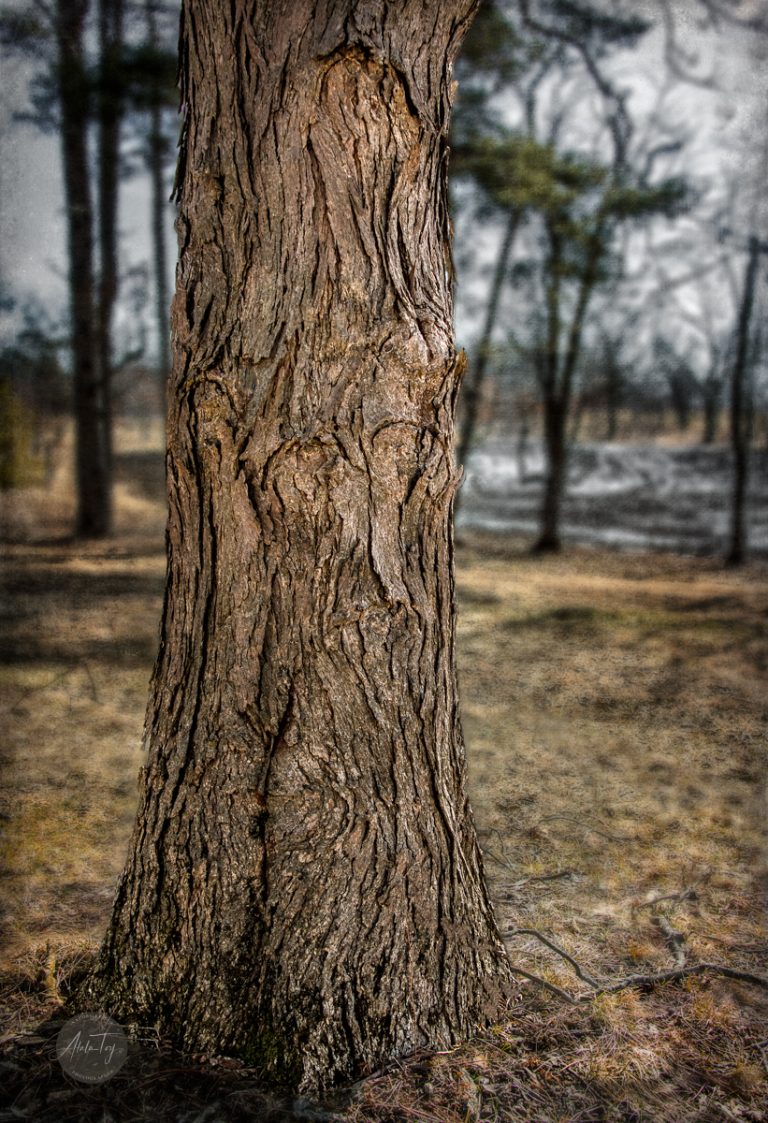
Tree Face – The Nose – LeRoy Oakes IL 2004
Trees adapt to their environment in ways that are visible, meaningful, and often profound. Over time, their form, structure, and expression shift in response to changing conditions. This reveals a dynamic relationship with the land around them.
I have followed several trees over the years, photographing them repeatedly and organizing my images not only by location but also by individual tree or rock. This approach allows me to observe change across time. Again and again, I see the same truth emerge: trees adapt to their environment, much as humans do.
If you are new to this way of seeing, you may want to begin with my foundational articles in Awaken.
Meeting “The Nose”
From the first moment I saw this tree—whom I call The Nose—I recognized him as a distinct and aware presence. He stood alone on a carefully maintained convent lawn near LeRoy Oakes Forest Preserve, positioned at the edge where the preserve met a retirement home.
In 2004, he held himself with a strong, dignified bearing. One long arm extended toward the convent building in the distance, maintaining an ongoing relationship with that contemplative space. In this way, he served as a guardian of the land. He oversaw the open lawn while also hosting a rich community of nature beings within his form.
As I spent time with him, I photographed and engaged with the many faces who appeared in his bark and structure. Each one formed part of the larger life he carried.
You can explore more examples like this in the Tree Beings gallery.
When the Environment Changes
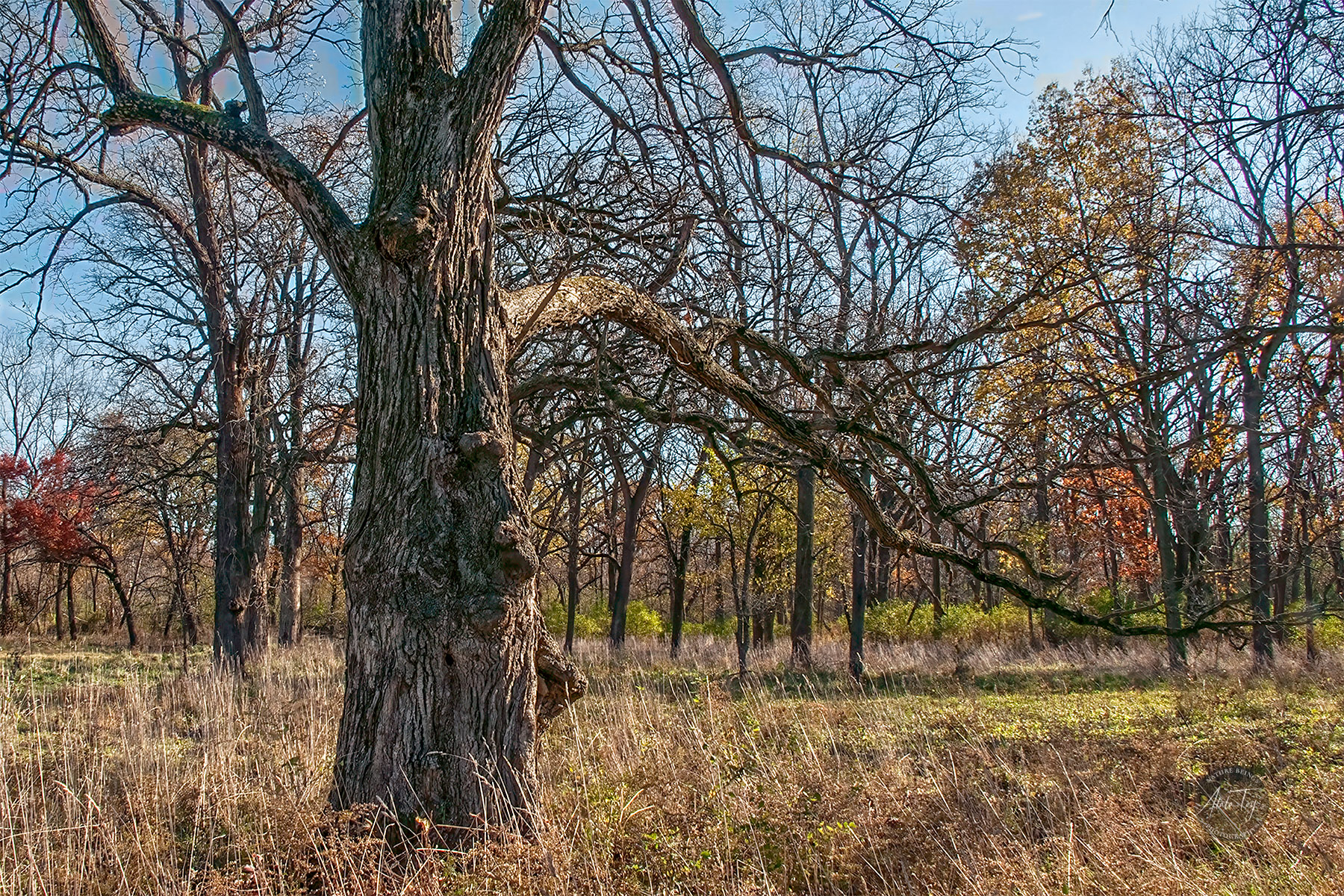
Tree Face – The Nose – LeRoy Oakes IL – 2010
A few years later, the convent closed and the land transitioned into the care of the preserve. The building was repurposed as a nature center. As a result, the manicured lawns gradually disappeared, and the surrounding landscape began returning to a more natural state.
This shift marked a significant turning point. It demonstrated clearly how trees adapt to their environment when conditions change in fundamental ways.
The In-Between Years
By 2010, the area had entered a transitional phase. It was no longer maintained, yet it had not fully returned to woodland. As a result, the space felt unsettled. The Nose reflected that instability in his own form and presence.
His structure grew uneven and unkempt, and his overall expression carried the weight of adjustment. He responded to the loss of the ordered landscape that had shaped his earlier years. During this period, the strain of sudden environmental change became visible, even as adaptation continued to unfold.
Turning Inward
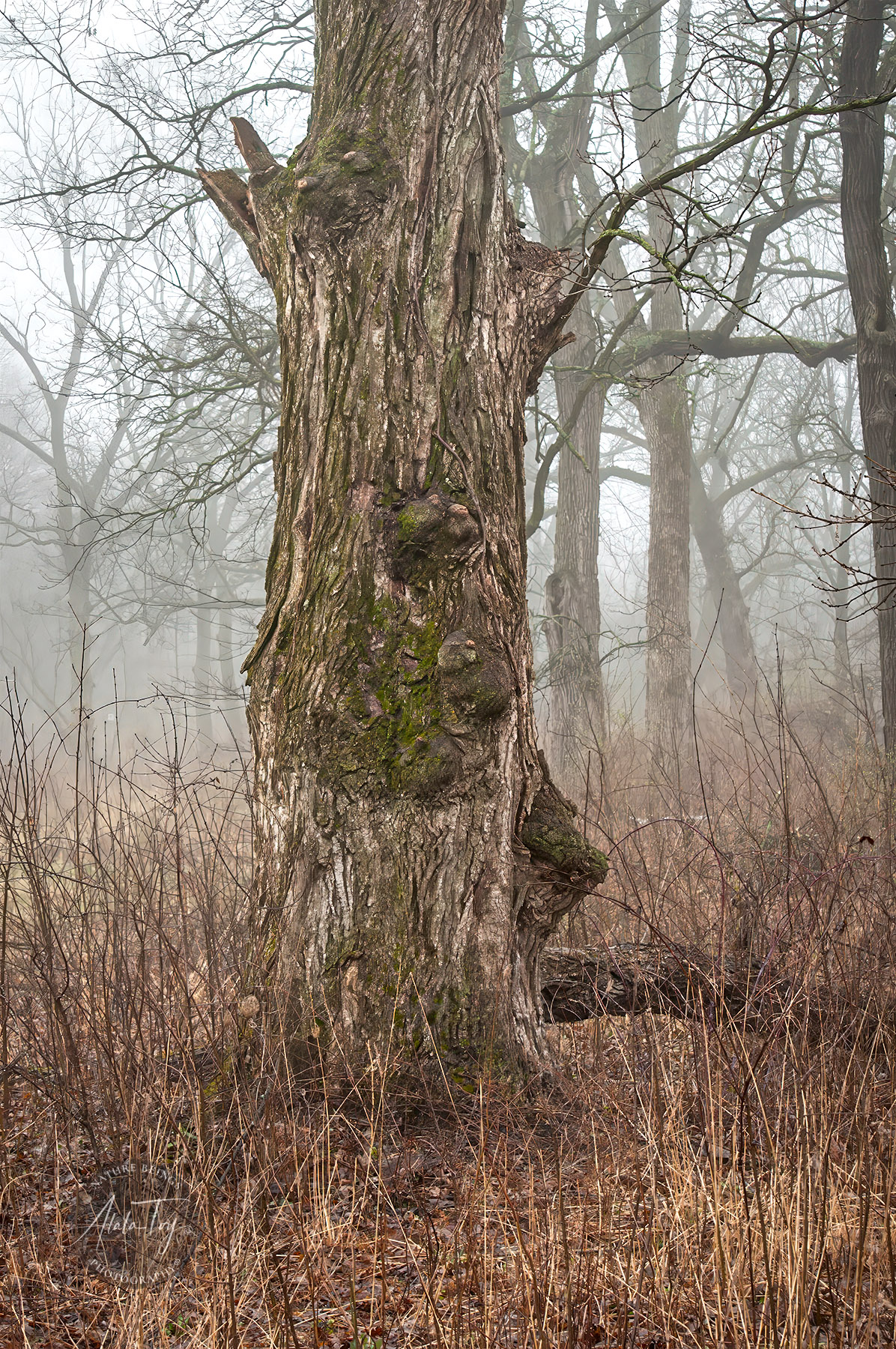
Tree Face – The Nose – LeRoy Oakes IL – 2017
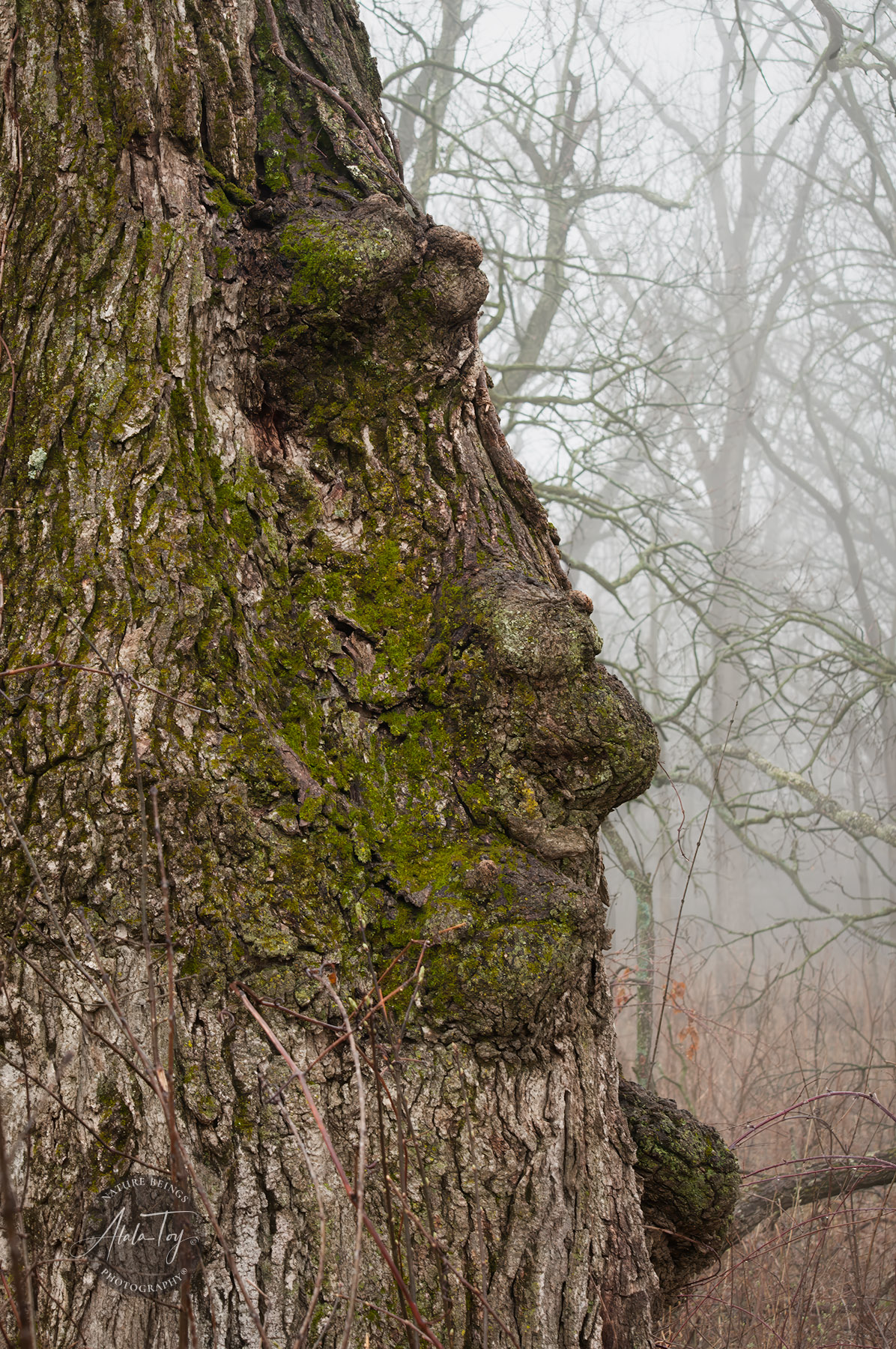
Tree Face-The Nose-Leroy Oakes IL-2017 Closeup
By 2017, a deeper transformation had taken place. The Nose no longer held himself in the same outward-facing posture. The long arm that once reached toward the convent had fallen away.
Instead, his energy turned inward. He shifted from external orientation to internal awareness.
As I approached him closely, I saw that this change brought with it a quiet joy. This appeared through a gentle smile that had emerged within his form. His life had not diminished; it had deepened.
Trees adapt to their environment not only through physical change but also through shifts in awareness. In this stage, that inward movement felt grounded and complete.
This inward awareness is explored more fully in Explore.
Fully Integrated with the Land
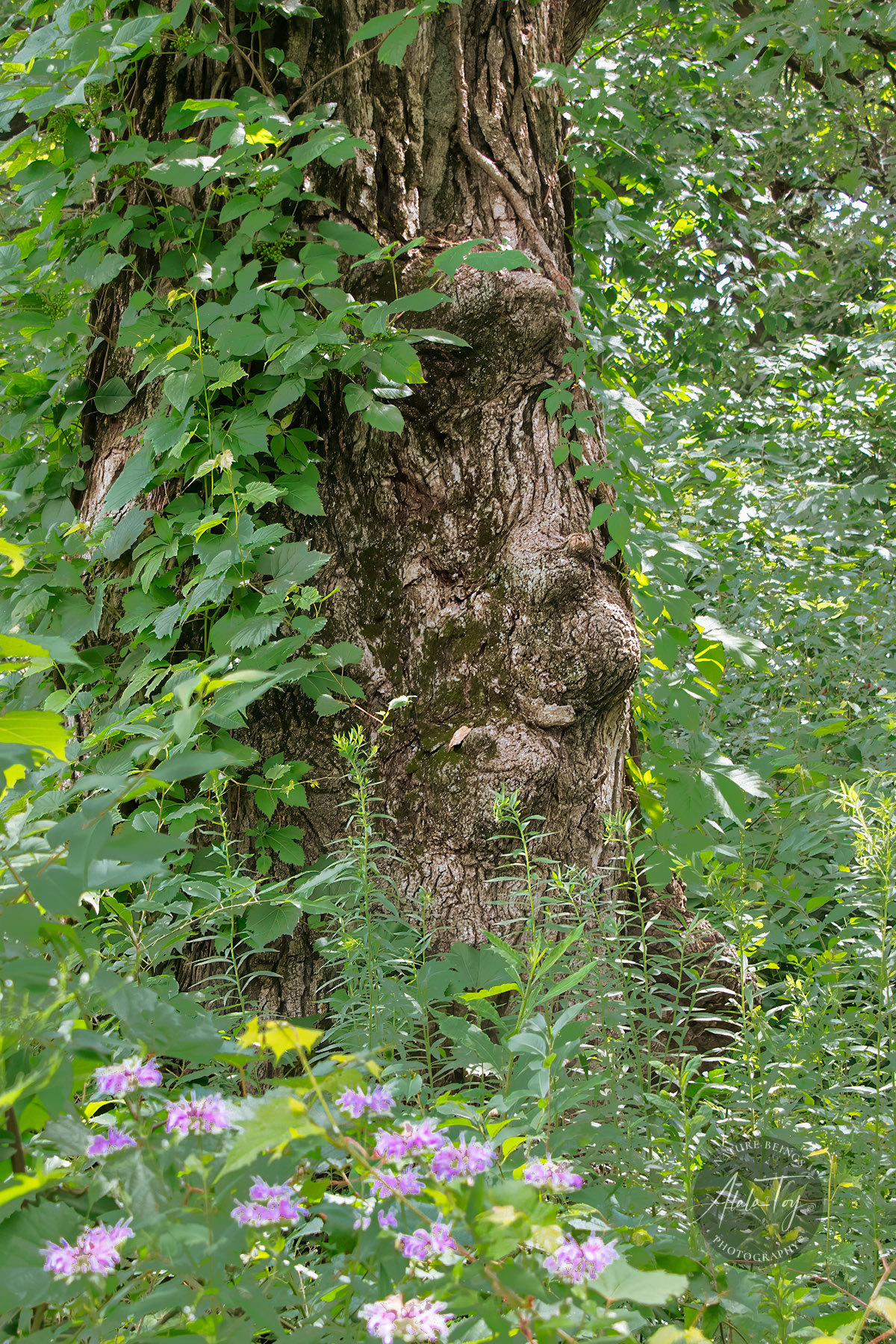
Tree Face-The Nose-LeRoy Oakes IL-2021 Closeup
Before I moved away in 2021, I visited him one final time during the summer months. At that point, I found him transformed once again.
He stood surrounded by abundant growth, with vines draped across his form and wild bergamot flourishing at his base. As a result, the landscape felt rich and integrated. He no longer stood apart from the land. Instead, he lived within it in a state of clear belonging.
Within his form, a new visage had emerged. While his nose is still prominent, it has also been transformed into a joyful nature being looked outward, with rounded cheeks, uplifted hair, and a wide, welcoming smile. His presence expressed ease, continuity, and a deep acceptance of the life he now lived.
Here again, trees adapt to their environment. This time, the transformation felt complete.
How Trees Adapt to Their Environment Over Time
This long-term relationship offers a clear and grounded understanding of how trees adapt to their environment. They respond to change with awareness, move through periods of disruption, and arrive at new forms of balance that reflect their evolving conditions.
They face the same fundamental challenge humans encounter: unasked-for change that reshapes the course of life. Yet over time, they demonstrate that adaptation can lead to depth, resilience, and even joy.
You can read more about these core ideas in Are the Faces We See in Trees Real?
Try This for Yourself
You can explore this process directly by choosing a tree who draws your attention and returning to visit over time. Photograph it across seasons and years. In doing so, you begin to notice how its form, presence, and expression shift in response to its surroundings.
This practice becomes a powerful way to witness how tree beings grow and adapt to their environment. At the same time, it offers insight into your own experience of change.
If you would like to share your observations, visit my community Facebook Group, Nature Beings Around the World
This is an update on my article originally published in March 2020.


0 Comments